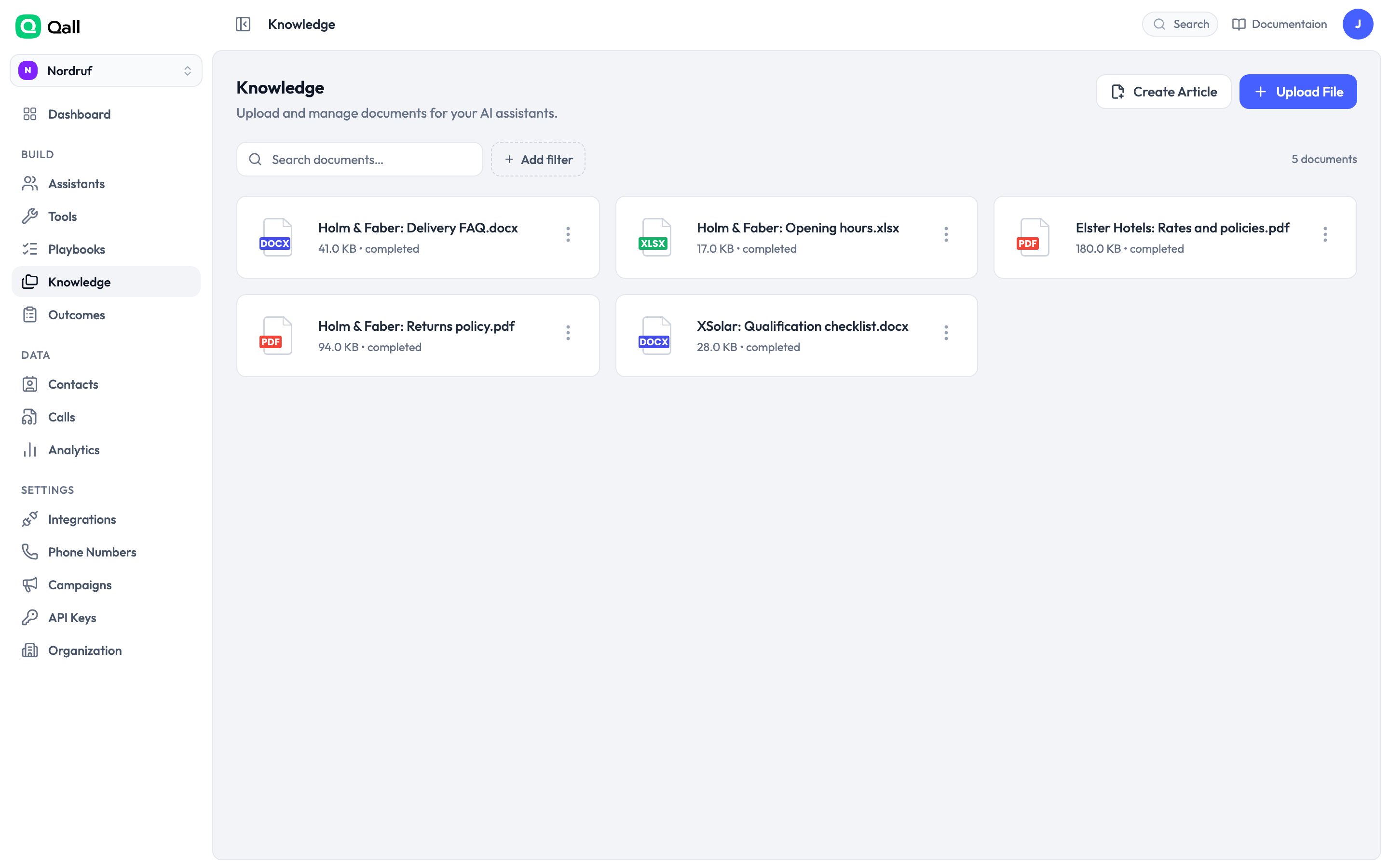
Upload your price list, opening hours or policies, attach them to an assistant, and it can answer from them — without you pasting everything into the prompt.
The knowledge base

The knowledge base.

Adding a document

Upload a file. PDF, Word, PowerPoint, Excel, text, Markdown, HTML, CSV, JSON, XML, EPUB and images. Up to 10 MB each. Or write one. Create an article and write it in the browser. Easiest for things that change often, like opening hours or this week’s offers. Either way the document is converted to text and indexed. That takes a moment — it’s ready when it shows as completed.
Check an uploaded PDF after it processes. What the converter extracts is all the assistant will ever see, and complex layouts don’t always survive. For anything important, an article you’ve written yourself beats a PDF you haven’t read.

Attaching it to an assistant

Attach documents from the assistant’s page. Each one gets a mode: Default to search. “Always in the prompt” costs tokens on every turn of every call whether it’s relevant or not, and the assistant has a limited amount of attention to spend.
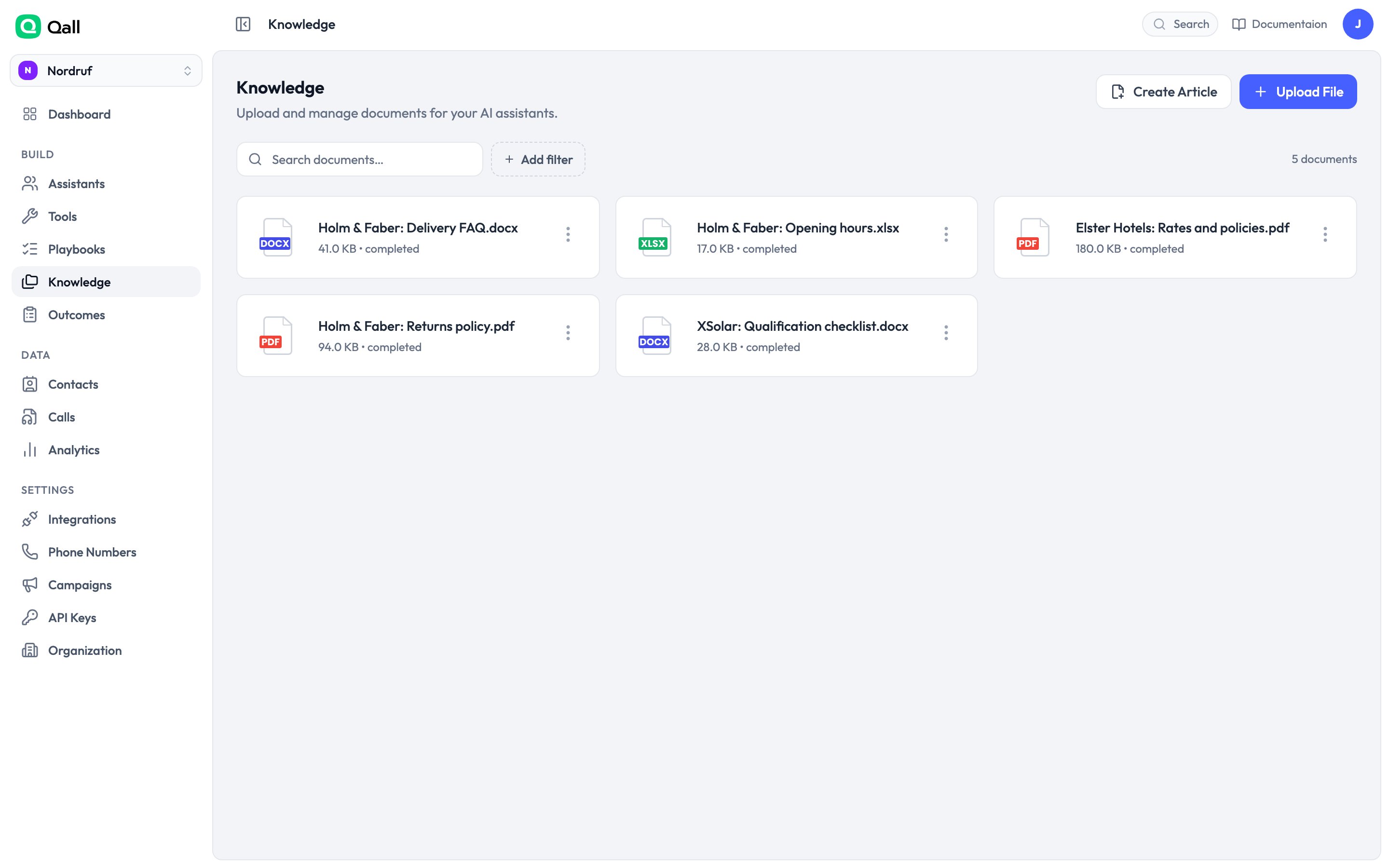
Knowledge attached to an assistant

Documents attached to an assistant, each with its mode.

How search works

Search combines two things: meaning, so “how much to park” finds a document about parking charges; and exact words, so a product code or a street name matches even when nothing is phrased the same way.
The exact-word half is tuned for English. On German, Dutch or French documents it still matches whole words, but not different forms of the same word — searching Rechnung won’t match Rechnungen. Meaning-based search covers most of the gap. If an important term is being missed, add it to the article in the forms callers actually use.
Each search returns the three most relevant passages. The assistant only sees passages that clear a relevance bar, so a question your documents don’t answer returns nothing rather than the closest thing.

Writing documents the assistant can use

Headings and short sections. Documents are split into passages, and a passage that covers one topic is a passage that gets found. Spell out what callers say. If people ring about “the parking thing”, the phrase “parking” should appear, not just “vehicular access charges”. Keep one topic per document. Three short documents beat one long one. Update rather than duplicate. Editing an article re-indexes it. Two documents that disagree make the assistant pick one, and you can’t predict which.

Finding documents

The knowledge list shows each document’s state and lets you search by name. Open any document to read what was extracted — which is what the assistant sees, and worth checking after a complex upload.

Inside a playbook

A playbook can hold its own articles, which stay in mind for the whole procedure and then drop away. Useful for terms and conditions the assistant should have during a refund and never otherwise.